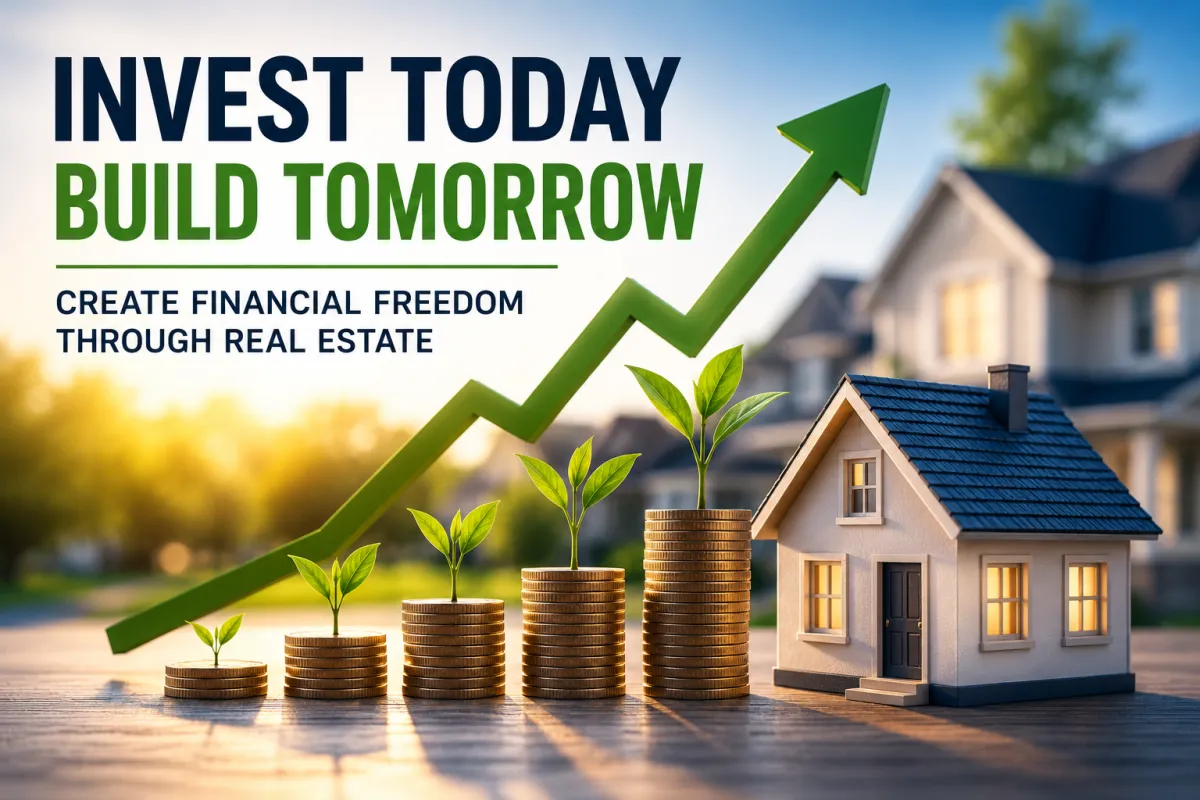
The $4.4 Million American Dream Is Now Even More Expensive: Why Income Alone Still Isn’t Enough
A widely referenced Investopedia-backed estimate places the lifetime cost of achieving the American Dream at roughly $4.4 million.
But in today’s environment, that number is starting to look conservative.
With continued inflation pressures, elevated interest rates compared to the last decade, and rising housing and healthcare costs across most U.S. markets, the real cost of maintaining a middle-class lifestyle is increasing faster than most household incomes can keep up with.
And that exposes a simple but important truth:
For most people, working harder is no longer enough.
You need assets that work for you.
What Makes Up the $4.4 Million Lifestyle Cost?
The estimate reflects cumulative lifetime spending across several core categories:
Housing and homeownership costs
Education, including college tuition and student debt
Healthcare expenses, which continue to rise with age
Retirement savings required to maintain lifestyle stability
Raising children, including childcare and schooling
Travel, leisure, and lifestyle spending over decades
None of these categories are unusual on their own.
But when layered over 30 to 50 years of adult life, they create a compounding financial requirement that most income streams struggle to match.
Especially in today’s environment, where affordability challenges are being felt across nearly every major U.S. metro.
The Real Issue: Income Has Not Kept Up With Reality
Even in 2026, the core challenge remains the same and in some ways more pronounced:
Income is linear.
Expenses are compounding.
A paycheck only grows when you trade more time, skill, or leverage in your career. Meanwhile:
Housing costs remain elevated in many markets
Insurance and healthcare continue to climb
Education and childcare remain structurally expensive
Inflation has reset the baseline cost of living
So even for high-income earners, the gap between income and lifestyle expectations continues to widen.
And that gap does not close with salary alone.
It closes with ownership.
Why Real Estate Continues to Matter More in Today’s Market
In a higher-rate, higher-cost environment, real estate has become less about speculation and more about structure, meaning how wealth is built and preserved over time.
Despite short-term market fluctuations, real estate still offers several durable advantages:
Long-Term Appreciation in Supply-Constrained Markets
Many U.S. regions continue to face housing shortages, especially in affordable and workforce segments.
Strong Rental Demand
High home prices and elevated interest rates have kept many households renting longer than in previous cycles.
Inflation-Adjusted Income Potential
As living costs rise, rents tend to adjust over time, helping offset inflation pressure.
Leverage Still Works When Used Correctly
Even in higher-rate environments, strategic financing can still amplify returns when deals are structured properly.
Tangible Asset With Control
Unlike paper assets, real estate allows active control through management, improvements, and positioning.
The Shift Smart Investors Are Making Right Now
The most important shift happening in today’s market is not panic. It is repositioning.
Investors are becoming more focused on:
Cash flow stability instead of pure appreciation
Market selection instead of speculation
Long-term hold strategies instead of short flips
Risk management instead of aggressive leverage
In other words, the focus is moving back to fundamentals.
Because in environments like this, fundamentals, not headlines, determine outcomes.
Building Wealth in a Higher-Cost World
The $4.4 million figure is not just a statistic. It is a signal.
It highlights a broader reality:
The cost of living the modern version of the American Dream continues to rise faster than traditional income structures can comfortably support.
Which means long-term financial success increasingly depends on one thing:
Owning assets that appreciate, produce income, and compound over time.
Real estate remains one of the most proven ways to do exactly that, especially when approached with discipline, proper market selection, and a long-term mindset.
Final Thoughts
In today’s economy, the question is no longer just:
How much do I earn?
It is becoming:
What am I building that continues to earn for me?
Because while income supports your present, assets determine your future.
And in a world where the cost of the American Dream continues to rise, ownership is what keeps it within reach.
Explore Turnkey Investment Opportunities
Visit www.turnkeyproppro.com
to browse available turnkey rental properties, review market opportunities, and connect with our team to learn how strategically selected single-family rentals can help you build long-term wealth through real estate investing.
